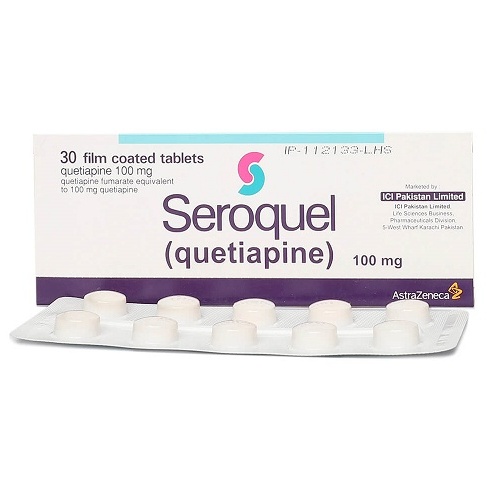
No, Seroquel (quetiapine) is a prescription-only medication in the United States. It cannot be legally purchased without a valid prescription from a licensed healthcare provider. Over-the-counter sales or online acquisition without a prescription is both illegal and unsafe.
Seroquel is the trade name for quetiapine, an atypical antipsychotic medication approved by the U.S. Food and Drug Administration (FDA) for several mental health conditions. It is most commonly used in the management of:
In clinical settings, it may also be prescribed off-label for insomnia, generalized anxiety disorder, or post-traumatic stress disorder, but these uses are not FDA-approved and should only be pursued under specialist care (FDA).
Seroquel (quetiapine) is classified as an atypical antipsychotic. On a biochemical level, its effects are primarily due to:
Unlike first-generation antipsychotics, Seroquel’s unique receptor profile leads to fewer movement disorders but increases risks like sedation and metabolic changes.
Metaphor: Think of Seroquel as a “traffic officer” in your brain — it blocks excessive signals on certain neural highways (dopamine, serotonin), helping restore balance in mood, perception, and thought.
Seroquel acts independently and does not require specific dietary conditions or external triggers for its effect.
As a psychiatrist, I often find that new patients expect Seroquel to provide rapid, dramatic improvement in their mood or thoughts. In reality, meaningful changes usually emerge gradually over days or even weeks. Some patients judge progress only by symptom severity, overlooking subtle improvements in sleep, energy, or anxiety that may come first. A frequent misconception is that the medication alone will “fix everything,” when, in truth, sustainable recovery often relies on therapy, healthy routines, and social support alongside medication. I encourage patients to ask not just “Is it working?” but “How is my daily functioning changing?” and to communicate any side effects immediately, as these can sometimes be managed before patients consider stopping treatment prematurely.
Administration: Seroquel is available in immediate-release (IR) and extended-release (XR) oral tablets. Both forms must be swallowed whole with water; XR tablets should never be split, crushed, or chewed.
Never adjust your dose or schedule without consulting your doctor. Abrupt discontinuation can trigger withdrawal symptoms or relapse.
Bottom line: Consistent routines and avoiding contraindicated substances are key for safety and efficacy.
Seroquel is not appropriate for everyone. Contraindications include:
Always discuss your full medical history with your doctor before starting Seroquel.
Side effects are grouped by frequency and clinical severity:
If you experience symptoms such as intense muscle stiffness, high fever, chest pain, irregular heartbeat, difficulty breathing, or severe allergic reactions, seek emergency medical attention immediately.
Common minor side effects (e.g., mild drowsiness, dry mouth) often lessen over time. Report all side effects to your doctor, who can adjust your treatment plan if needed.
| Type of Product | Can It Be Combined? | Consequences |
|---|---|---|
| Alcohol | NO | Increased sedation, risk of respiratory depression |
| Grapefruit juice | NO | Increases Seroquel levels, higher risk of side effects |
| SSRI antidepressants | Yes (with monitoring) | Possible increased sedation; monitor for serotonin syndrome |
| CYP3A4 inhibitors (e.g., ketoconazole) | NO | Dangerously high Seroquel blood levels |
| Over-the-counter sleep aids | Generally not recommended | Excessive sedation, risk of confusion |
Awareness and communication are key to avoiding these pitfalls.
For many patients and caregivers, comparing Seroquel to other options is crucial for informed decision-making. Below is a direct comparison with commonly used alternatives:
| Medication | Typical Indications | Onset Speed | Duration | Key Side Effects | Estimated Price per Tablet (USD, 2026) |
|---|---|---|---|---|---|
| Seroquel (Quetiapine) | Schizophrenia, bipolar disorder, adjunctive depression | 1–2 weeks for full effect | 12–24 hours | Sedation, weight gain, metabolic changes | $0.30–$1.20 (generic); $10 (brand) |
| Abilify (Aripiprazole) | Schizophrenia, bipolar disorder, MDD adjunct | 1–2 weeks | 24–48 hours | Akathisia, insomnia, less weight gain | $0.50–$1.50 (generic); $15 (brand) |
| Risperdal (Risperidone) | Schizophrenia, bipolar mania, autism irritability | 1–2 weeks | 20–24 hours | Hyperprolactinemia, movement symptoms | $0.25–$1.00 (generic); $9 (brand) |
In short: Seroquel tends to cause more sedation and weight gain, but fewer movement disorders compared to some alternatives. Price varies significantly between brand and generic products.
| Parameter | Value |
|---|---|
| Generic Name | Quetiapine fumarate |
| Available Strengths | 25 mg, 50 mg, 100 mg, 200 mg, 300 mg, 400 mg |
| Formulations | Immediate-release, extended-release tablets |
| Storage | Room temperature (68–77°F), dry place, away from light |
| Prescription Required | Yes |
| Controlled Substance | No (but monitored due to misuse risk) |
If you have liver or kidney conditions, your doctor will adjust dosing accordingly.
With the rise of telehealth and mail-order pharmacies, safety remains a priority. Use these strategies to avoid counterfeit or unsafe products:
Counterfeit medicines are a real risk, especially online. To help ensure authenticity:
Understanding Generics: Generic quetiapine is FDA-approved as equivalent to Seroquel in terms of active ingredient, strength, and efficacy. Inactive ingredients (excipients) may vary, which could matter if you have allergies or sensitivities.
Advantages: Lower cost, same therapeutic benefit. Disadvantages: Rare risk of intolerance to certain fillers or dyes; consult your pharmacist if you have known allergies.
If you or someone you know has taken too much Seroquel, act quickly:
Symptoms of overdose may include extreme drowsiness, rapid heart rate, fainting, confusion, or seizures. Prompt medical attention is critical.
If you have urgent symptoms (suicidal thoughts, severe side effects), seek emergency help.
Mental health conditions are common and treatable. Reaching out for help is a sign of strength, not weakness. If you’re struggling, consider talking to a loved one or a qualified mental health professional. Medication is just one part of a comprehensive recovery plan.
In my clinical judgment, Seroquel is often best suited for patients with schizophrenia or bipolar disorder who require reliable symptom stabilization but are sensitive to movement-related side effects seen with older antipsychotics. It’s also an option for those with treatment-resistant depression as an adjunct. However, it’s not always ideal for patients already struggling with obesity, diabetes, or high cholesterol, given the drug’s metabolic profile. In elderly patients with dementia, I generally avoid Seroquel due to increased mortality risk. For individuals mainly experiencing insomnia or anxiety, I carefully weigh non-pharmacological strategies and alternative medications first. Ultimately, the decision to prescribe Seroquel is based on a balance of benefits and risks, existing health conditions, and patient preferences, with ongoing monitoring and willingness to adjust as needed.