
Subtotal ₨ 0




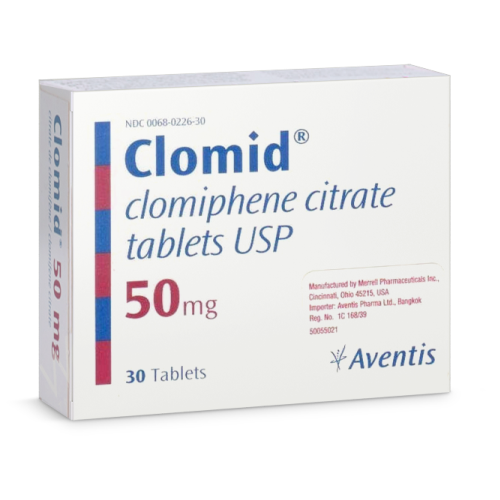
How does Clomid work to treat female infertility?
Clomid’s active ingredient, clomiphene citrate, is a selective estrogen receptor modulator (SERM). It works primarily by blocking estrogen receptors in the hypothalamus—a brain region responsible for regulating reproductive hormones. This “tricks” the body into thinking estrogen levels are low, prompting the pituitary gland to release more follicle-stimulating hormone (FSH) and luteinizing hormone (LH). These hormones stimulate the ovaries, encouraging follicle (egg) development and ovulation.
- Receptor Target: Clomiphene competitively inhibits estrogen binding to receptors in the hypothalamus.
- Resulting Effect: Increases gonadotropin (FSH/LH) release, which induces ovulation in women with certain types of infertility.
- Conditions for Effectiveness: Clomid requires functional ovaries and an intact hypothalamic-pituitary-ovarian axis. It is not effective if ovarian function is absent or severely impaired (e.g., primary ovarian failure, early menopause).
Metaphor: Imagine Clomid as a “reset button” for your brain’s reproductive hormone controls. By masking natural estrogen signals, it encourages your body to make the hormones needed for egg release.
It’s important to note that while Clomid effectively induces ovulation in many women, it does not address all forms of infertility, such as blocked fallopian tubes or severe male-factor infertility. [See Sources]
Myth vs Reality: Myth: Clomid guarantees pregnancy for everyone who takes it. Reality: Clomid can help induce ovulation, but several other factors are needed for successful conception, and not all causes of infertility will respond.