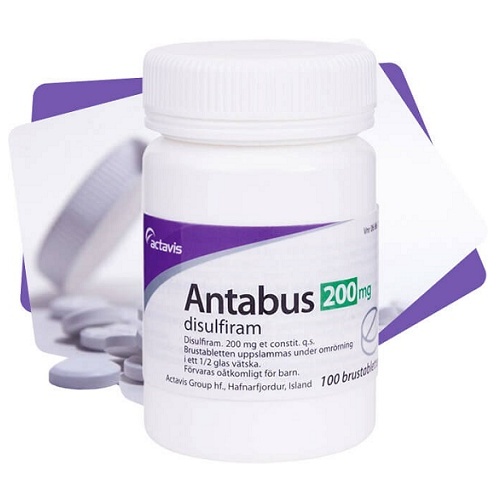
No, Antabuse (Disulfiram) is a prescription-only medication in the United States. It cannot be legally obtained without a valid prescription from a licensed healthcare provider. Purchasing or using Antabuse without a prescription is unsafe and may be illegal.
Antabuse’s active ingredient, Disulfiram, is a well-established pharmacologic agent for the management of alcohol dependence. Its principal mechanism involves irreversible inhibition of the hepatic enzyme aldehyde dehydrogenase (ALDH). Under normal circumstances, ALDH catalyzes the conversion of acetaldehyde—a toxic metabolite—into the less harmful acetic acid during alcohol metabolism. When Disulfiram is present, ALDH activity is blocked, causing a rapid buildup of acetaldehyde in the blood after any alcohol consumption.
This accumulation results in an intense Disulfiram–ethanol reaction, characterized by flushing, nausea, vomiting, tachycardia (fast heart rate), hypotension (low blood pressure), headache, and sometimes respiratory difficulty or chest pain. The onset of these symptoms typically occurs within 10–30 minutes of alcohol intake and may last for several hours depending on the alcohol dose and individual sensitivity.
Metaphorically, think of Disulfiram as a “roadblock” in your body’s alcohol-processing pathway: when you drink, the roadblock causes toxic traffic (acetaldehyde) to pile up, leading to immediate and very uncomfortable consequences. Antabuse does not reduce craving for alcohol nor does it address underlying psychological triggers, but it creates a strong negative association with drinking.
Effectiveness depends entirely on the presence of alcohol as a trigger—for the deterrent effect to occur, the individual must ingest alcohol while taking Disulfiram. Without alcohol exposure, the medication remains pharmacologically inactive.
Recent clinical data, including a 2024 systematic review of randomized controlled trials, affirm that Disulfiram’s efficacy is greatest when used in a structured treatment setting with close supervision and psychosocial support (PubMed, FDA).
In my experience, a significant misconception is that Antabuse will “take away” the desire to drink or fix the underlying causes of alcohol use disorder. Many patients expect to feel something different once they start the medication or hope it will directly reduce cravings. In reality, Antabuse serves as an external deterrent—it’s most effective when individuals are motivated to stop drinking and use the medication as a psychological safety net. A common clinical challenge is the temptation for patients to “test” whether the reaction will occur, or to underestimate the severity of consequences if alcohol is consumed. For best results, patients should understand that Antabuse is not a cure, but a helpful tool within a broader recovery plan. It’s also vital for patients to inform all healthcare providers—including dentists and pharmacists—about their Antabuse use, as many over-the-counter and prescription products contain hidden alcohol.
Initial dosing: In the United States, the recommended starting dose of Antabuse is typically 500 mg once daily for 1–2 weeks, taken orally in the morning. After the initial period, the maintenance dose is usually reduced to 250 mg daily. Some patients may require as little as 125 mg or as much as 500 mg daily for maintenance, depending on individual response and tolerability (FDA).
The deterrent effect begins as soon as the medication reaches adequate levels in the body—typically within 12–24 hours after the first dose. Its effect persists for up to 1–2 weeks after stopping due to slow elimination of Disulfiram and its metabolites.
Alcohol (strict prohibition): Any alcohol intake, even in small amounts (as little as 7–15 mL of ethanol), can trigger a severe Disulfiram–ethanol reaction. This includes not only alcoholic beverages but also alcohol-containing foods (e.g., sauces, extracts), cosmetics, aftershave, and certain medications (cough syrups, mouthwash, cold remedies).
Food: Normal meals do not significantly impact Disulfiram absorption. High-fat meals have not been shown to delay onset or reduce efficacy; however, always take as directed by your healthcare provider.
Grapefruit juice: There is no current evidence of a clinically significant interaction between Disulfiram and grapefruit juice.
Key point: Read all product labels and consult your doctor or pharmacist about any potential alcohol sources in your diet, medications, or personal care products.
| Type of Product | Can it be combined? | Consequences |
|---|---|---|
| Aspirin | Yes | No major interactions |
| Warfarin | Use with caution | May increase warfarin levels; monitor INR closely |
| Metronidazole | STRICTLY NO | Risk of acute psychosis |
| Nitroglycerin | STRICTLY NO | Severe hypotension, possible collapse |
| Paracetamol (Acetaminophen) | Yes | No clinically relevant interaction |
| Alcohol-containing products | STRICTLY NO | Risk of severe reaction |
Antabuse should only be started after a minimum 12-hour period of abstinence from alcohol. In patients with a recent myocardial infarction (heart attack), Antabuse initiation should be deferred until complete stabilization and with cardiology consultation.
Why? Patients with severe liver or cardiac disease are at increased risk of fatal complications from a Disulfiram–ethanol reaction, including arrhythmias, acute heart failure, or hepatic decompensation.
Side effects with Antabuse can be categorized according to frequency, as per the World Health Organization classification.
If side effects occur: Mild symptoms (e.g., drowsiness, metallic taste) may resolve with dose reduction. Severe symptoms (jaundice, confusion, difficulty breathing, skin blistering) require immediate discontinuation and urgent medical attention.
The most serious risks—hepatotoxicity and severe Disulfiram–ethanol reactions—are rare but potentially fatal. Liver function tests are recommended before starting therapy and periodically thereafter.
After oral administration, Disulfiram is rapidly absorbed from the gastrointestinal tract. It undergoes extensive hepatic first-pass metabolism, forming several active metabolites that inhibit ALDH.
Impaired liver function may lead to higher levels of the drug and an increased risk of adverse effects.
Antabuse is not the only prescription medication for alcohol dependence. The two main alternatives approved in the United States are Naltrexone and Acamprosate. The following table summarizes key comparative features as of 2026:
| Medication | Mechanism | Onset | Effect Duration | Common Side Effects | Price/month (USD, 2026) |
|---|---|---|---|---|---|
| Antabuse (Disulfiram) | ALDH inhibitor (deterrent) | 12–24 hours | Up to 2 weeks after last dose | Metallic taste, drowsiness, rash | $60–$120 |
| Naltrexone | Opioid receptor antagonist (reduces reward) | 1–2 hours (oral); depot within 24 hours | 24 hours (oral); 4 weeks (depot) | Nausea, headache, fatigue | $120–$180 (oral); $1,000+ (depot) |
| Acamprosate | Glutamate modulator (restores balance) | 1–2 hours | Continuous (twice daily dosing) | Diarrhea, flatulence, nausea | $70–$140 |
Bottom line: Antabuse is unique in its deterrent approach; it’s best for those highly motivated to abstain and with strong support systems. Naltrexone and Acamprosate work differently—reducing cravings and alcohol’s pleasurable effects—but require adherence and regular use. Cost, insurance coverage, and side effect profiles also differ.
| Parameter | Value |
|---|---|
| Active ingredient | Disulfiram |
| Available strengths | 250 mg, 500 mg tablets |
| Usual starting dose | 500 mg daily for 1–2 weeks |
| Typical maintenance dose | 125–500 mg daily |
| Time to effect | 12–24 hours |
| Effect duration after last dose | 1–2 weeks |
| Storage | Room temperature, keep dry and away from light |
| Packaging | Blister packs or pharmacy bottles |
Buying prescription medications online can be risky if you use unverified sources. In the United States, only pharmacies certified by the National Association of Boards of Pharmacy (NABP) and displaying the VIPPS (Verified Internet Pharmacy Practice Sites) or “.pharmacy” seal should be trusted (NABP).
Genuine Antabuse (Disulfiram) tablets in the United States are typically supplied as white, round, scored tablets marked with the dosage (250 mg or 500 mg) and the manufacturer’s logo. Packaging should display:
Unusually low prices, misspelled labels, or poor-quality packaging are common warning signs of counterfeit or imported non-equivalent products. If you suspect your medication is not genuine, consult your pharmacist or contact the manufacturer directly.
Disulfiram is now off-patent, and FDA-approved generics are considered clinically equivalent. Generic products may use different inactive ingredients (excipients), which rarely—but occasionally—can cause allergic reactions. If you have known allergies to certain fillers or dyes, discuss options with your pharmacist.
Advantages of generics: Lower cost, equivalent efficacy if sourced from a reputable U.S. pharmacy. The main risk comes from purchasing generics through unauthorized or overseas websites, which may not meet FDA quality standards.
Symptoms of overdose may include drowsiness, confusion, unsteady gait, changes in consciousness, or seizures. There is no specific antidote—supportive care and symptom management are provided in a hospital setting.
If in doubt, speak to your pharmacist before use.
Alcohol dependence is common and treatable. Many people benefit from combining medication like Antabuse with therapy and support groups. Discussing your struggles with friends, family, or a mental health professional is an important part of recovery—there is no shame in seeking help.
In my practice, Antabuse is most beneficial for adults who are highly motivated to remain abstinent and who understand the consequences of alcohol consumption while on the medication. It works best when part of a structured recovery program that includes counseling and family or peer support. Patients with a stable home environment and good insight into their condition are typically the best candidates. However, for those with a history of severe liver or cardiac disease, cognitive impairment, or high relapse risk without supervision, the risks may outweigh the benefits and alternative treatments should be considered. I always counsel patients that while Antabuse can be a powerful deterrent, it is not a standalone solution; readiness to change and ongoing therapy are necessary for lasting results. In cases of persistent side effects, adherence challenges, or evolving clinical status, I routinely reassess whether to continue, adjust, or transition to another therapy such as naltrexone or acamprosate.